Skip to content


True Cost of the Tax Credit for Homebuyers

Not only is the American taxpayer getting taken by outright fraud from over 110,000 unlawful first-time homebuyer tax credits, but we are vastly overpaying for the economic benefit.  In my previous post about the true cost of government subsidies I stated that taxpayers spent about $7,234 per additional car sold because of the cash for clunkers program.  According to the Brooking insitute, the cost of the first-time homebuyer’s credit cost quite a bit more:

Each additional home sale generated by the $8,000 first-time homebuyers’ tax credit actually costs the government $43,000.

How’s that possible? Gayer figures that of the 1.9 million homebuyers that will get the $8,000 tax credit, 85% would have bought a house anyway. The price tag of $15 billion — about twice what Congress had intended — he reckons will result in approximately 350,000 additional home sales, at a price tag of $43,000 for each additional sale.

That’s nothing compared to the tab for a possible one-year, $15,000 tax credit for all home buyers (except those with high incomes.) Gayer figured that would cost the Treasury $73.9 billion, which he estimated would increase house sales by a total of 253,000. Each of those extra home sales would cost the Treasury $292,000 ($73.9 billion divided by 253,000.)”

The next time someone tells you how good the stimulus programs have been for the markets and the economy, remind them how much it is costing each one of us.

Posted in Economics, Politics.

Tagged with , , , , , .


True Meaning of “Going Viral”

FlowingData has some excellent visualizations of time series data.  The animations really show you how there ends up being a Starbucks on every block or how a YouTube video ends up in nearly every email box in the world in a matter of hours.

Inauguration of Obama on Twitter

Inauguration of Obama on Twitter

Growth of WalMart Stores

Growth of WalMart Stores

Peak Oil Anyone?

Peak Oil Anyone?

Posted in Economics, Markets.

Tagged with , , .


Mitigating Gamma Losses

In a previous post, I broadly addressed the risk many individual investors ignore or do not understand while buying options as speculative investments – the impact of volatility on option values.  This unique risk is mostly covered by the term vega, or the sensitivity of the option’s price to changes in volatility.  Option traders have a love affair with greek letters of the alphabet when describing the risks embedded in options (though vega is not really a letter in the standard greek alphabet).  The other most misunderstood “greek” is named gamma and is often the risk that trading desks diligently and tightly limit as a risk management practice.

Explanation of Vanilla Put and Call Options:

Let us first review the basics before we dive into the more complicated topic of what gamma means and how to limit it.   Options are loved by many investors in part because they generally limit the amount of risk taken in a speculative bet.  When buying a call option, the investor pays a fixed premium and receives profits when the stock goes above the predetermined strike price before the option’s expiration.  With a put option, the investor pays a fixed premium and receives profits when the stock goes below the predetermined strike price before expiration.  Quite simple and best shown in an illustration:
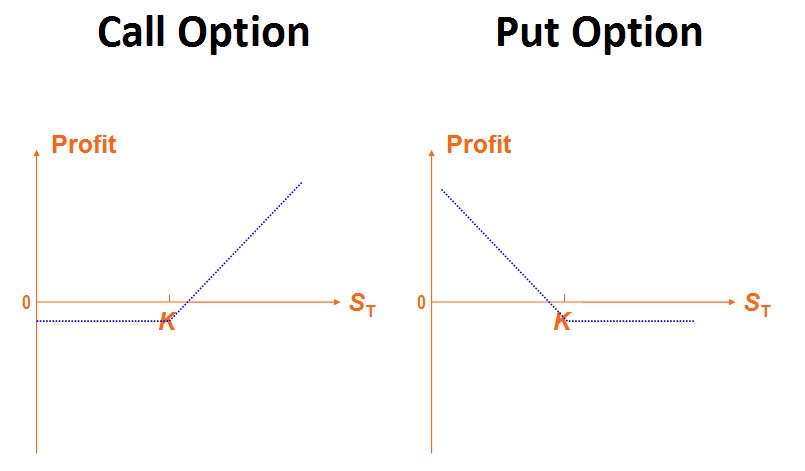
Simple Call and Put Option Payoffs

Explanation of Simple Call and Put Option Payoffs

The analysis of the option’s value at expiration is rather simple as well.  If you purchased a put option contract for 100 shares of IBM stock at a strike price of 90 and the stock price closes at 75 on expiration, then the payoff is (90-75)=$15 per share or $15*100=$1,500 in profit.  The complexity of the option is apparent between the time you purchase/sell the option and the time that the option expires.  Unlike buying/shorting a stock, an option’s contract has a non-linear payoff function.  The non-linearity of the payoff function is represented by gamma, while the linear portion of the payoff is represented by delta.

For the remainder of this post we will express our problem with a simple example:

  • Purchased put option on Yahoo (YHOO) stock (100 shares=1 contract) on October 21, 2009 for a premium of $3.20
  • Strike of the put option = $17.50
  • Expiration of the put option is January 21, 2011
  • Current price of Yahoo is $17.20
  • Yahoo does not currently pay a dividend
  • Volatility will remain fixed at 40% and interest rates at 1%
The Payoff on the put option is smooth at trade date but then approaches the payoff on expiration as we move forward in time

The Payoff on the put option is smooth at trade date but then approaches the payoff on expiration as we move forward in time

The above graph demonstrates the curvature of the put option’s payoff and how it changes as time passes and as the stock moves along different prices.  The maximum profit on this graph would be $8.50. To achieve this profit, the investor would need to sell the stock at the $17.50 strike price and have Yahoo’s price trade at $9 at expiration.

Explanation of Gamma:

The gamma represents the curvature of the option’s payoff curve. The below graph adds the curvature of the gamma over  the option’s payoff curves. It demonstrates the put option’s upward spiking gamma as the option approaches its strike price and as its time to expiration dwindles. As we move closer and closer to expiration, the curvature of the gamma reaches its maximum, peaking at the option’s strike price.  The peak occurs when the strike price and the underlying stock price converge.

Gamma spikes as expiration nears

Gamma spikes as expiration nears

Delta is the change in the price of the option contract for a given change in the price of the underlying stock.  When the delta is .5, that means that the option value changes $.50 for every $1 change in the stock.  The gamma is the rate of change of delta.  We can understand this spike by thinking of this yahoo option 1 minute before expiration of the contract.  If the stock is currently sitting at $17.60 one minute before expiration when the strike for the put option is at $17.50, the outcome is binary.  Either the option is going to expire worthless or it is going to be in the money and profitable for the option buyer.  That means that when the stock is trading around $18 the value of the option will not move very much, but as the stock approaches $17.50 the option delta accelerates (gamma) quickly until it reaches 1 and is trading dollar for dollar with the underlying stock.

Gamma risk is mostly ignored by individuals who are buying options, but it must be watched closely by those who are selling options either as an income generation strategy or for those who act as  market makers, even if they delta hedge the linear risk multiple times a day.  Gamma can escalate quickly, so it is a risk that should be managed closely for anyone wanting to be a net option seller.

Most individual investors sell options and do not delta hedge their exposures.  The most popular strategies for individual investors are selling call spreads, butterflies, iron condors, or calendar spreads.  Most of these option selling strategies exist and are promoted by trainers for the sole purpose of mitigating gamma losses.  When selling a spread you strictly limit your losses to the cap of the upper option, but in doing so you are giving away a lot of the premium in the option that you are selling.

Gamma should only be scary for those who do not practice strong risk management.  Stop giving away your profits by capping your losses and instead focus on developing your own risk management strategy.  There are two key principles to stick to:

  1. Close out winning positions that have even a remote chance of ending in the money.  If you sell an option for $1 per share, do not ride it through expiration for the last $.10 while risking massive losses if there is a dislocation in the market.
  2. Close out losing positions before they get out of hand.  Holding on to losers and hoping for comebacks is a recipe for disaster.  The gamma will continue to increase as you hold onto the losing trade and your risk profile continues to get uglier.

Posted in Derivatives, Educational, Markets, Trading Ideas.

Tagged with , , , , , , , , .


Insidious Bank Fees and Usury

You might have heard about Congress’ major work this summer in protecting the consumer against unfair credit card terms.  It was called “H.R. 627 – The Credit Card Act of 2009”.  From what I can tell, the only thing this act does is require more disclosures.  Has anyone really read the 30 page documents that come for each of  your credit cards every 4 months as the terms change?  I haven’t.  The only protection I see is that they supposedly prohibit over-limit charges unless the consumers “opt-in“.  But I think we all know that the bank will take it as an “opt-in” if you do not reply that you “opt-out”.

I opened a Wells-Fargo checking account about a year ago because I received a “Get $50 if you open up a free checking account with Wells Fargo!”.  Seemed like some free money and it was a convenient location for me so I stopped in, opened up an account with a personal banker, got the usual sales pitch on everything from brokerage accounts to mortgages.  I simply wanted the checking account and was told that everything was kosher.

It turns out that on the 12th of every month I was charged a $15 fee.  The first time I went in and talked to the personal banker, she said, “I have no idea why it would be charging you a fee, you have met all criteria for the account, but we could set up a savings account with a direct deposit to see if that makes it go away…”  I said that I had no interest in a savings account that paid .12% interest.  The second month I called in, got a different response – told me that it was because it was linked up to a business account so it was triggering the payment and assured me that everything would be fixed for the following month.  The third month the same thing happened and I was provided zero help from someone who probably has difficulty figuring out how to make coffee in the morning.  The fourth month I lost it.  I was on the phone with 4 different people and hung up on once.  Finally I sat down, read through all of the documents and decided that I would simply convert this from a “Premium” checking to a “Free” Checking account.

That solved the recurring monthly fee problem but introduced another.  Yesterday I withdrew $60 from my “Free checking” account from an ATM machine that did not charge anything for its use.  Today I found that Wells Fargo charged me $2.50 for withdrawing money on a non-wells fargo ATM machine as well as $1.50 for checking my balance on that same machine. Four dollars on a $60 withdrawal or about 6.7% for withdrawing cash from a machine that itself charged no fee.  It’s as if I was withdrawing money at Scores.

Another example was happily provided by American Express.  I had been a never late/full balance paying customer for over 5 years when I made the epic mistake of paying a $27 balance 1 day late. The vultures came out with a ravenous appetite.   The customer service rep made me feel like I owed my first born for having her lift the $35 late fee, but at least I thought the problem was over.  The following month I had a massive interest charge on my bill.  I thought it must be a mistake.  It turns out that on this particular credit card, and probably most American Express cards, if you make a late payment once then you are charged interest on the average carrying balance for the next two months after you made your late payment.  In this case, the $27 was just the start of me beginning to heavily use the American Express card as I made it my primary credit card.  This meant, that because I was 1 day late on a $27 balance I was told to pay a high interest rate for two months on about $2500 in average balances. When I (twice) asked the customer service rep to tell me how this could be possibly be considered fair she replied (twice) “this is what is stated in your credit card terms”.  I even put it in terms of the bank, “so basically you are punishing me for using the credit card after I have made a late payment.  In fact if I did not use this card for two months after making the late payment (thereby not having an average balance that they could charge interest on), then there would be little to no interest paid as a penalty”.  Response: “That is correct sir.”

These are two small and petty examples of how absolutely ridiculous the banks are with their insidious fees, but it only brings to light how terribly embezzled the average American consumer is.  The average American household carries $8,000 in credit card debt.  With an unemployment rate of 10% and bills stacking up, how many unfair penalties are being paid to the banks?  Not only do they need to borrow from the government (taxpayer) at zero percent and lend out to the consumer (taxpayer) at 6-20%, but they need to tack on fees that would make the average bookie flinch.

Congress’ solution: create an empty shell of a document called “The Credit Card Act of 2009” and tell the public that you are standing up for the little guy.

Posted in Conspiracy, Media, Politics.

Tagged with , , , , , .


Banking or Trading?

Now that we have heard from all three of the large banks – Bank of America, CitiGroup and JP Morgan, we have a mixed picture.  JP Morgan had a very solid earnings announcement of $.82 per share versus an estimate of $.47.  CitiGroup slightly beat with a posted loss of -$.27 versus an estimate of -$.31 mostly due to an undeserved reduction in credit loss provisions. Bank of America came in this morning with a huge miss of -$.26 a share versus an estimate of -$.16.  The underlying loan quality of JP Morgan is showing through as it trounces B of A and CitiGroup, even though JP Morgan’s credit card unit swung to a $700M loss from a positive $292 a year earlier.

But despite all of the credit deterioration messes, all of the banks seem to be going crazy with trading profits.

Bank of America: Trading profits rose 57% over the second quarter to $3.4 billion.

JP Morgan: Fixed income trading revenue was $5B for the 4th quarter, accounting for 1/5th of the total $26B for the quarter.

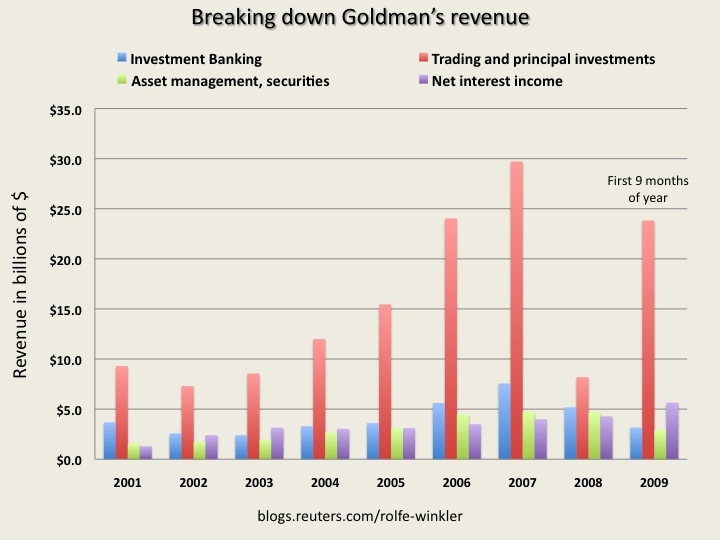
And then we get to Goldman Sachs…unburdened by credit delinquencies or chargeoffs (are they truly a bank?), they are free to generate most profits from trading.  Although trading profits for Goldman were down slightly in third quarter, I think this chart shows the story:

Goldman, Trading their way to god-like status.

Goldman, Trading their way to god-like status.

Let us break this down quickly:  Banks have been given a license to steal by the Fed for a very long time now and some of the big boys are still losing money.  Banks can effectively borrow at 0% from the government (taxpayers) and lend out that money to consumers (taxpayers) at 6-25%.  Even though they were given this license to steal, where are they generating profits?  Through highly leveraged trading revenue.  What happens when credit spreads tighten in and equity markets hit their apex?  Then do they all start shorting the market?

You cannot make $5B in one quarter off of transactional Bid/Ask spreads in Fixed Income.  These banks are making speculative bets as revenue drivers.  What happens when there are not any bets left to make and they still do not want to lend to consumers in an economy with 10% unemployment?

Posted in Conspiracy, Markets, Media, Politics.

Tagged with , , , , , , , , , .


Copyright © 2009-2013 SurlyTrader DISCLAIMER The commentary on this blog is not meant to be taken as an investment advice. The author is not a registered investment adviser. There is no substitute for your own due diligence. Please be aware that investing is inherently a risky business and if you chose to follow any of the advice on this site, then you are accepting the risks associated with that investment. The Author may have also taken positions in the stocks or investments that are being discussed and the author may change his position at any time without warning.

Yellow Pages for USA and Canada SurlyTrader - Blogged

ypblogs.com