Skip to content


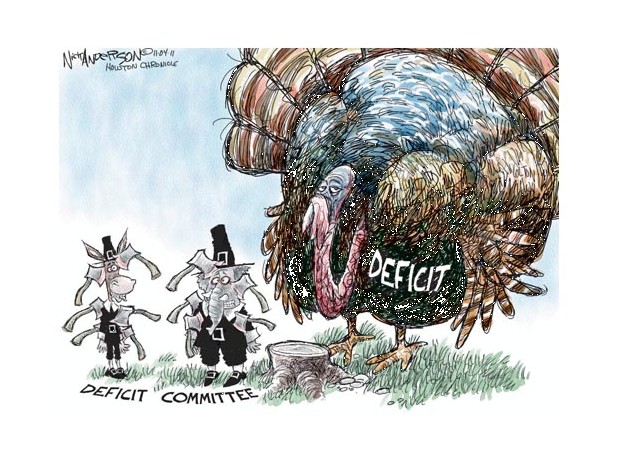
Happy Thanksgiving

For a little bit of history, learn that the Thanksgiving we know came about in 1941 as a boost to the economy:

From the book of knowledge (wikipedia):

Thanksgiving in the United States, much like in Canada, was observed on various dates throughout history. The dates of Thanksgiving in the era of the Founding Fathers until the time of Lincoln had been decided by each state on various dates. The first Thanksgiving celebrated on the same date by all states was in 1863 by presidential proclamation. The final Thursday in November had become the customary date of Thanksgiving in most U.S. states by the beginning of the 19th century. And so, in an effort by President Abraham Lincoln (influenced by the campaigning of author Sarah Josepha Hale who wrote letters to politicans for around 40 years trying to make it an official holiday), to foster a sense of American unity between the Northern and Southern states, proclaimed the date to be the final Thursday in November.[16]

It was not until December 26, 1941 that the unified date changed to the fourth Thursday (and not always final) in November—this time by federal legislation. President Franklin D. Roosevelt, after two years earlier offering his own proclamation to move the date earlier, with the reason of giving the country an economic boost, agreed to sign a bill into law with Congress, making Thanksgiving a national holiday on the fourth Thursday in November.


Posted in Media.


Historic Skew

Despite the fact that short term implied volatility has declined, longer term implied volatility has continued to hover at extreme levels.  Five year implied volatility is near 30%, but the more interesting phenomenon is the spread between 90% and 110% moneyness in longer tenors.  If we focus just on the 12-month S&P 500 skew, we are seeing a gap of nearly 7% in the 90/110 skew:

Extreme Put Premium

If we extend this chart to 2002, it almost appears that the premium on downside protection has been steadily increasing.  This could mean that selling puts is incredibly attractive or the markets are setting up for the great wealth reset.

Posted in Derivatives, Markets, Trading Ideas.

Tagged with , , , , , .


Headline Risk Surrounds Gold & the S&P 500


Guest Post by JW Jones at OptionTradingSignals.com

The current trading environment is one of the most difficult that I can recall in recent memory. Risks abroad regarding the European sovereign debt crisis is keeping market participants on edge as headline risk seemingly surrounds traders at every turn.

In addition to the risk posed by Europe, the market’s reaction to the Congressional Super Committee’s upcoming statements also poses risks. As it stands now, the media is reporting that the committee is in gridlock and has yet to compromise. The deadline for the Super Committee is Wednesday, November 23rd. The gridlock leads to uncertainty, and Mr. Market hates uncertainty. High levels of uncertainty corresponds with increased volatility levels, thus caution is warranted.

Recently I have been actively trading around the wild price action, but I have been utilizing smaller position sizes in light of the elevated volatility levels. In addition to the smaller position sizes, I have been aggressively taking profits and moving stops in order to protect trading capital.

This past week, members of my service enjoyed two winning trades. We were able to lock in gains on a SPY Put Calendar Spread for a nice 20% gross gain. On Friday we closed a USO Put Calendar Spread for a gross gain of 17%. These trades were relatively short term in duration, but the gains they produced were strong.

Both trades took advantage of increased volatility which resulted in enhanced profits. If volatility remains elevated going forward which I expect, these types of trades will offer great risk / reward going forward. Volatility is an option traders friend, and this past week members of my service were able to lock in some strong gains with relatively muted levels of risk.


Gold Futures

I have not written much about gold recently as I have honestly not seen a great deal of opportunity in either direction there. The price action has been quite volatile, but this past week we saw gold futures sell off sharply. I believe the explanation for the selloff is partially due to strength in the U.S. Dollar. The daily chart of the U.S. Dollar Index is shown below:
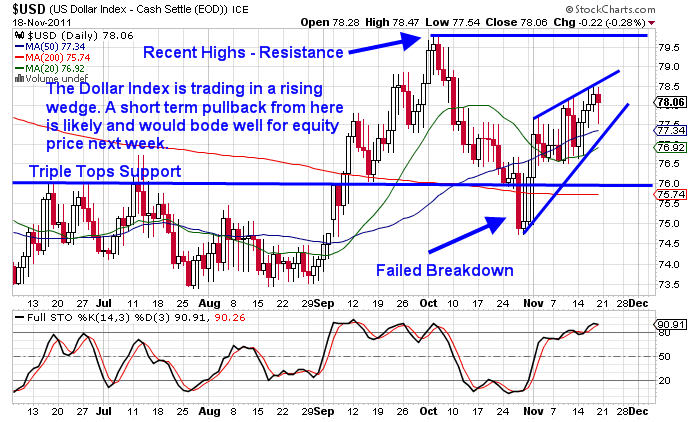


The recent selloff in gold can likely be attached to the increase in margin calls around the world as a likely consequence of the MF Global bankruptcy. Uncertainty surrounds the commodities market as the collapse of MF Global has interrupted traditional capital flows and broad based volume around the world. The MF Global situation continues to provide a negative headwind for financial markets in general.

I continue to be a long term bull regarding precious metals as nearly every central bank is either printing money deliberately or is increasing the money supply through quantitative easing. With multiple calls coming out of Europe over the weekend for the European Central Bank to print money to monetize European sovereign debt, it may not be long before the ECB begins their own quantitative easing program. In the long term this can only mean higher prices for gold.

Right now the short term looks bearish for gold as the daily chart of gold futures shows gold tested near the top of a recent rising channel and failed. The selloff was strong, but  a pullback here makes sense from a technical perspective. The daily chart of gold is shown below:


The longer term time frame continues to remain technically positive for the yellow metal. As long as gold prices hold in their multi-year rising channel, higher prices remain likely. Right now the $1,500/ounce price level needs to hold as support if the bulls are going to remain in control in the long term time frame. The weekly chart of gold futures shown below illustrates the long term rising channel:


Right now we are in a seasonally strong period for gold. I am going to be watching closely in coming weeks for a solid entry point to get long the yellow metal for a longer term time frame. Right now the short term remains bearish, but the longer term is bullish from technical and fundamental viewpoints.


S&P 500

The S&P 500 Index sold off sharply during the past week. In my most recent article, I discussed two key price levels to monitor to the downside. The key support levels were the 1,230 and 1,190 price levels respectively. The bulls need the 1,190 area to hold as support to give them any chance for a “Santa Claus Rally” into year end.

Last week the S&P 500 Index closed below the 1,230 support level meaning the 1,190 area has to hold. Otherwise, we could see a sharp selloff into the end of the year. The daily chart of the S&P 500 below illustrates the key support levels:


The S&P 500 looks vulnerable to the downside presently. However, headlines coming out of Europe and/or the Super Committee this week could push prices higher. The key pivot line remains around the 1,257 price level on the daily chart. If the bulls can regain the 1,257 price level on a weekly close a test of 1,290 will become more likely. However, as long as prices remain below 1,230 and 1,257, the S&P 500 is vulnerable to additional downside.

I would not be shocked to see the S&P 500 push higher this week to work off short term oversold conditions. Truncated weeks result in lower than average volume which generally favors the bulls. However, in this environment anything could seemingly happen. Risk is high in either direction.


Posted in Markets, Trading Ideas.

Tagged with , , .


Noteworthy News – November 21, 2011

Economy:

U.S. Birth Rates Hit Record Lows: Is It the Economy? – Time

How the top 1 percent made its money in two charts – Washington Post

7 Charts That Sum Up Our Jobs Mess – Motley Fool

25 college majors with the highest unemployment rates – CBS Money Watch

25 college majors with lowest unemployment rates – CBS Money Watch

Paying Students To Quit Law School – Slate

Markets:

Fed Now Largest Owner of U.S. Gov’t Debt—Surpassing China – CNSNews

Housing Wins Higher FHA Mortgage Limits – Bloomberg

Housing Starts in U.S. Declined 0.3% in October – Bloomberg

Contagion grips euro zone debt markets – Reuters

Politics:

How we can succeed through supercommittee’s ‘failure’ – Washington Post

Financial Repression Redux – IMF

Federal debt tops $15 trillion: Total increased $56 billion in one day – Washington Times

ECB Has Secret 20 billion Euro Bond-Buying Limit: Report – MSNBC

Banks:

Closing Wall Street’s casino – Reuters


Posted in Economics, Markets, Media, Politics.


Inflation: Japan Vs. United States

There is a constant comparison between the United States today and Japan post their 1990 asset bubble.   In fact, you will often find a comparison between the US stock market pattern and that of the Nikkei.  The reality is that nothing could ever be that simple.  In my opinion, there are a few large differences between the US situation and that of Japan, but the one that tops my list is the difference in inflation and the aggressiveness of our central bank versus that of Japan’s.  The easiest way to visualize that difference is to look at the reported CPI numbers from the two countries:

Short period of deflation during the crisis, but rapid recovery in inflation for the United States

With today’s reported US CPI coming in at 3.5%, this story has not changed.  Ben Bernanke realizes that in a contracting economy, after over-expansion, the most destructive force to add to the mix is a period of deflation and its negative feedback loop – which has been coined the “liquidity trap”.  Below, I will reiterate a section from an August 2010 post when inflation was running at just over 1%:

SurlyTrader, August 2010 “The Battle Between (In/De)Flationists“:

In Ben Bernanke’s 1999 paper titled “Japanese Monetary Policy: A Case of Self-Induced Paralysis?”, Ben outlines a set of monetary actions for the Japanese.  In the introduction, Ben outlines the reasons for the Japanese scenario, all of which sound eerily similar to our own dilemma:

Among the more important monetary-policy mistakes were 1) the failure to tighten policy during 1987-89, despite evidence of growing inflationary pressures, a failure that contributed to the development of the “bubble economy”; 2) the apparent attempt to “prick” the stock market bubble in 1989-91, which helped to induce an asset-price crash; and 3) the failure to ease adequately during the 1991-94 period, as asset prices, the banking system, and the economy declined precipitously.

He follows be going into detail regarding Japan’s deflationary environment throughout the 1990′s and how that indicated that the Japanese monetary policy was not accommodative enough.  He then admits that under current financial systems, as opposed to when countries were under the gold standard:  ”inflation or mild deflation is potentially more dangerous in the modern environment than it was… (because) The modern economy makes much heavier use of credit, especially longer-term credit, than the economies of the nineteenth century”.

The rest of the paper discusses Bernanke’s argument for how the Japanese monetary policy can get Japan out of its liquidity trap.  In what is probably the most enlightening paragraph within the paper, Ben ruffles his “helicopter” feathers:

The general argument that the monetary authorities can increase aggregate demand and prices, even if the nominal interest rate is zero, is as follows: Money, unlike other forms of government debt, pays zero interest and has infinite maturity. The monetary authorities can issue as much money as they like. Hence, if the price level were truly independent of money issuance, then the monetary authorities could use the money they create to acquire indefinite quantities of goods and assets. This is manifestly impossible in equilibrium. Therefore money issuance must ultimately raise the price level, even if nominal interest rates are bounded at zero. This is an elementary argument, but, as we will see, it is quite corrosive of claims of monetary impotence.

Increase aggregate demand by increasing the money supply and purchasing assets.  It is as simple as that.  This will also destroy the currency which will fuel the attractiveness of goods in the currency:

Indeed, as I will discuss, I believe that a policy of aggressive depreciation of the yen would by itself probably suffice to get the Japanese economy moving again.

After reading the 10 year old academic paper by Ben, you should realize that he has the resolve and tools to get inflation sparked in the United States.  The only wild card is if the Federal Reserve’s power is limited by congress or if Ben Bernanke is removed from office.  Both of those outcomes seem unlikely to me.  As for whether inflation is good, well that is an argument for another day.   The only question I have is why anyone in his/her right mind would want to lock in 10 year treasury yields today at 2.6%? (Edit: Today that number would be 2.01%)

You can read Ben’s full paper at your leisure: Bernanke – Case of Self-Induced Paralysis


Posted in Economics, Markets, Politics.

Tagged with , , , , , , , , , , .


Copyright © 2009-2013 SurlyTrader DISCLAIMER The commentary on this blog is not meant to be taken as an investment advice. The author is not a registered investment adviser. There is no substitute for your own due diligence. Please be aware that investing is inherently a risky business and if you chose to follow any of the advice on this site, then you are accepting the risks associated with that investment. The Author may have also taken positions in the stocks or investments that are being discussed and the author may change his position at any time without warning.

Yellow Pages for USA and Canada SurlyTrader - Blogged

ypblogs.com